


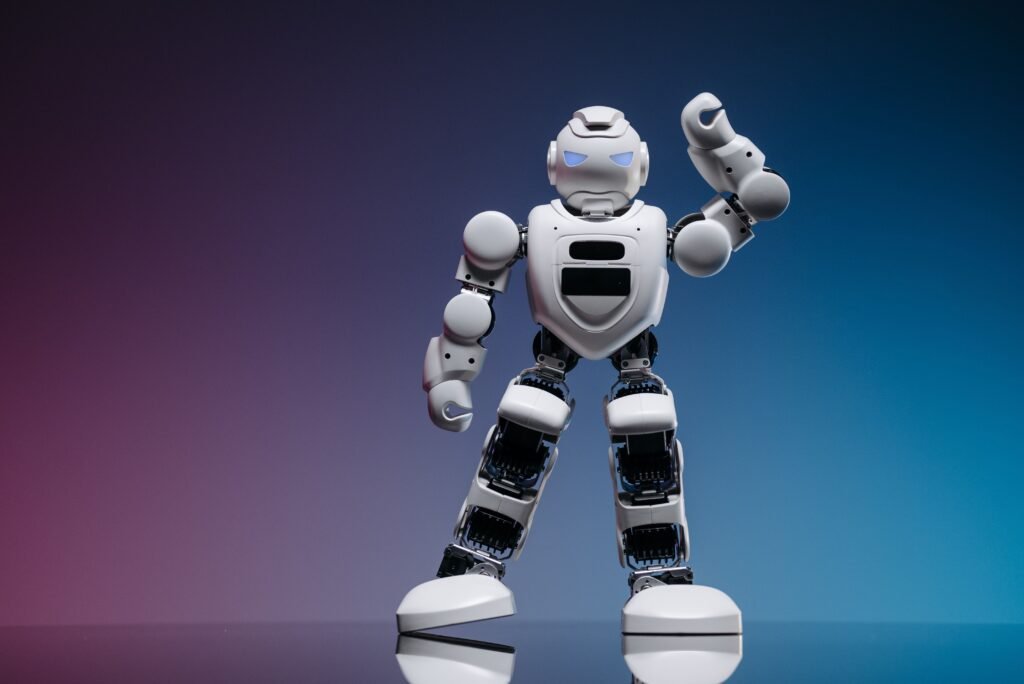
Artificial intelligence has become one of the most powerful technologies of the modern era. What once seemed like science fiction is now being used every day by students, entrepreneurs, marketers, designers, programmers, content creators, and businesses.
In 2026, AI is no longer limited to simple chatbots. Modern AI tools can write articles, analyze documents, create images, generate videos, research information, design presentations, build websites, edit content, and help people automate complicated tasks.
The biggest challenge is no longer finding an AI tool.
The challenge is knowing which AI tool is best for a particular job.
Some tools are excellent for research. Others are better for writing, design, images, video, coding, or business. In this article, we will explore 10 AI tools and categories worth trying in 2026, what they are good at, and how you can use them in real life.
1. ChatGPT — The All-Purpose AI Assistant
ChatGPT is one of the most versatile AI tools available today.
It can be used for many different tasks, including writing, research, brainstorming, learning, coding, translation, summarization, image generation, file analysis, and data analysis. Depending on the plan and available features, it can also search the web and perform deeper research across multiple sources.
What can you use ChatGPT for?
You can use it to:
- Write articles and reports
- Improve your English
- Summarize books and documents
- Explain difficult subjects
- Brainstorm business ideas
- Create marketing strategies
- Analyze data
- Write and debug code
- Generate images
- Research current information
- Prepare presentations
- Translate text
- Create study plans
For example, if you want to start a small online business, you could ask ChatGPT to help you identify a target audience, develop a business idea, create a marketing strategy, write social-media posts, and analyze competitors.
The important thing is that ChatGPT is not only a question-and-answer tool.
It can become a thinking and productivity partner when you give it clear instructions.
Best for:
General productivity, learning, writing, research, business, brainstorming, coding, and everyday AI assistance.
2. Google Gemini — AI Connected to the Google Ecosystem
Gemini is Google’s family of AI models and tools.
One of its major advantages is its connection to Google’s broader ecosystem. For people who already use Google services heavily, this can make AI particularly useful for everyday productivity.
Gemini can help users with tasks such as writing, brainstorming, summarizing information, understanding content, coding, and working with different types of media.
Imagine you are working on a business project and need to organize information, develop ideas, and create content.
Instead of doing everything manually, you can use AI to accelerate the process.
Why is Gemini interesting?
Google has enormous experience in search, cloud computing, productivity software, and AI research.
This combination makes Gemini an important tool to watch in 2026.
For students and professionals who already live inside Google’s ecosystem, Gemini can be particularly useful.
Best for:
Google users, productivity, research, brainstorming, coding, and multimodal AI tasks.
3. Claude — A Powerful Tool for Writing and Reasoning
Claude, developed by Anthropic, has become particularly popular among people who work with long documents, writing, analysis, and complex instructions.
One of Claude’s strengths is its ability to work with large amounts of information and produce organized, thoughtful responses.
For example, imagine you have a long business report.
Instead of reading every page manually, you could use an AI assistant to help summarize the major points, identify important arguments, extract useful information, and organize the content.
Claude can also be useful for:
- Long-form writing
- Editing
- Research assistance
- Brainstorming
- Coding
- Business analysis
- Document analysis
For writers, one of its biggest advantages is that it can help develop ideas while maintaining a consistent tone and structure.
Best for:
Long-form writing, document analysis, reasoning, coding, and professional work.
4. Perplexity — AI for Research
Perplexity is especially interesting if your main goal is research.
Traditional search engines usually provide a list of links. You then have to open multiple pages, read them, compare information, and decide which sources are useful.
AI-powered research tools can make this process faster by helping organize information into a conversational answer.
Perplexity is designed around this research-oriented experience.
For example, imagine you want to research:
“What are the best business opportunities in Africa in 2026?”
Instead of opening dozens of websites manually, you can use an AI research tool to help gather and organize information.
However, there is an important rule:
Never blindly trust an AI-generated answer.
Even advanced AI systems can make mistakes or misunderstand information. For important topics, you should check the original sources.
Best for:
Research, finding information, comparing topics, and source-oriented answers.
5. Canva AI — From an Idea to a Design
Canva has traditionally been known as an easy-to-use graphic design platform.
But AI is changing what Canva can do.
Canva AI 2.0 is designed to let users move from an idea to a finished design through conversational interaction. Canva says its newer AI features can help create designs, generate elements, assist with writing, conduct web research, work with brand guidelines, and produce editable creative outputs.
This is especially useful for people who are not professional designers.
You could describe what you want and then refine the result.
For example:
“Create a professional Instagram advertisement for a modern coffee shop.”
You can then change the text, layout, images, colors, and other elements.
Canva AI can be useful for:
- Social-media posts
- Presentations
- Posters
- Business advertisements
- Logos and brand materials
- Marketing content
- Presentations
- Images
- Written content
Canva is particularly powerful because design and AI are being brought together in the same workflow.
Best for:
Design, marketing, social media, presentations, branding, and visual content.
6. AI Video Tools — Turning Text Into Video
AI video generation is one of the fastest-moving areas of artificial intelligence.
Instead of spending hours filming and editing a video, creators can increasingly use AI to generate or transform video content.
Modern AI video tools can help with:
- Text-to-video generation
- Image-to-video animation
- Video editing
- Background replacement
- Character animation
- Short-form social videos
- Product videos
- Marketing videos
- Visual effects
Imagine a business owner who wants to advertise a new product.
Instead of hiring an entire production team for a simple social-media advertisement, AI can help create a first version of the video much faster.
A creator could start with a simple idea:
“Create a cinematic advertisement showing a young entrepreneur working in a modern office.”
The AI can then generate visual material that can be edited into a final video.
Why AI video matters
Video has become one of the most important forms of online content.
Platforms such as YouTube, TikTok, Instagram, and other social networks have created enormous demand for short and engaging videos.
AI allows creators to produce more content with fewer resources.
Best for:
Content creators, marketers, YouTubers, advertisers, and social-media businesses.
7. AI Image Tools — Create Visuals From Your Imagination
AI image generation has changed graphic creation dramatically.
Instead of searching for an existing photograph, users can describe an image and generate a new visual.
For example:
“Create a futuristic African city at sunset, with modern skyscrapers, electric vehicles, and people walking through a busy street.”
An AI image generator can turn that description into an image.
This is useful for:
- Advertising
- Social media
- YouTube thumbnails
- Product concepts
- Posters
- Presentations
- Storytelling
- Website graphics
- Creative projects
AI image tools are particularly useful when a creator needs a very specific visual that would be difficult or expensive to photograph.
However, users should also consider copyright, consent, trademarks, and the rules of the specific platform they are using.
Best for:
Designers, marketers, content creators, businesses, artists, and social-media users.
8. AI Writing Tools — Your Digital Writing Assistant
AI writing tools are becoming increasingly useful for anyone who works with words.
They can help users:
- Write blog posts
- Improve grammar
- Rewrite sentences
- Create headlines
- Write advertisements
- Generate email drafts
- Summarize information
- Create social-media captions
- Improve clarity
- Adapt writing to different audiences
For example, a business owner could write a simple idea such as:
“We are launching a new product next week.”
An AI writing tool could turn that basic idea into several versions:
- A professional announcement
- An Instagram caption
- A LinkedIn post
- An email
- An advertising headline
This can save a significant amount of time.
But good writers should not completely surrender their voice to AI.
The best approach is to use AI as an assistant, while the human remains responsible for the ideas, accuracy, personality, and final editing.
Best for:
Writers, students, marketers, entrepreneurs, professionals, and content creators.
9. AI Coding Tools — Build Software Faster
Artificial intelligence is also changing software development.
AI coding assistants can help programmers:
- Write code
- Explain code
- Find bugs
- Refactor programs
- Generate functions
- Create documentation
- Learn programming concepts
- Build prototypes
This is particularly useful for beginners.
Someone who has an idea for a simple website but does not know much programming can use AI to understand the basic structure and gradually build the project.
For experienced developers, AI can reduce the time spent on repetitive tasks.
However, AI-generated code still needs to be reviewed and tested.
A programmer should never assume:
“The AI wrote it, so it must be correct.”
AI can generate code that looks convincing but contains errors, security problems, or inefficient solutions.
Best for:
Developers, students learning programming, startups, and technical teams.
10. AI Productivity and Automation Tools — Let AI Do the Repetitive Work
The final category is perhaps one of the most important for businesses: AI automation.
Instead of using AI only to answer questions, businesses can use it to automate workflows.
For example:
A customer sends a message → AI reads it → identifies the customer’s request → creates a response → sends the information to the correct team → updates a database.
This can save employees significant amounts of time.
AI automation can be used for:
- Customer support
- Email processing
- Data entry
- Lead management
- Marketing workflows
- Scheduling
- Document processing
- Reporting
- Business operations
The real power of AI is not simply making one task faster.
It is connecting multiple tasks together.
That is where AI begins to move from being a tool to becoming part of a company’s workflow.
The Most Important Lesson: Don’t Use AI Just Because It Is Popular
With thousands of AI tools appearing every year, it is easy to become overwhelmed.
You do not need 50 different AI subscriptions.
You need the right tools for your goals.
For example:
| Your Goal | Recommended AI Category |
|---|---|
| General AI assistant | ChatGPT |
| Google-based productivity | Gemini |
| Long documents and writing | Claude |
| Research | Perplexity |
| Graphic design | Canva AI |
| Video creation | AI Video Tools |
| Image generation | AI Image Tools |
| Writing and editing | AI Writing Tools |
| Programming | AI Coding Tools |
| Business automation | AI Automation Tools |
How to Use AI More Effectively
The quality of your AI results depends heavily on how you communicate with the tool.
A vague prompt such as:
“Write something about business.”
will usually produce a generic answer.
A better prompt is:
“Write a 1,500-word article about how small businesses can use social-media marketing in 2026. Use simple but professional English, include five practical strategies, real-world examples, and a conclusion for beginner entrepreneurs.”
The second prompt gives the AI:
- A topic
- A target audience
- A length
- A tone
- A time period
- A structure
- Specific requirements
The result will usually be much more useful.
This skill is often called prompting or prompt engineering.
AI Is Not Replacing Human Intelligence
One of the biggest misunderstandings about AI is the idea that people no longer need to think.
The opposite is true.
As AI becomes more powerful, human skills such as critical thinking, creativity, judgment, communication, and decision-making become even more important.
AI can generate ten ideas.
A human still needs to decide which idea is actually good.
AI can write an article.
A human should check whether the information is accurate.
AI can create an image.
A human decides whether that image communicates the right message.
AI can analyze data.
A human needs to understand what the results mean for the business.
The future is therefore not necessarily:
Humans vs. AI.
It is increasingly:
Humans + AI.
Final Thoughts
2026 is becoming a fascinating period for artificial intelligence.
Tools such as ChatGPT, Gemini, Claude, Perplexity, Canva AI, AI video generators, AI image generators, AI writing assistants, coding tools, and automation platforms are changing how people work and create.
The most successful AI users will not necessarily be the people who use the most tools.
They will be the people who understand when to use AI, which tool to choose, how to give it good instructions, and how to verify the results.
If you are a student, entrepreneur, marketer, designer, developer, writer, or content creator, learning how to use AI effectively can give you a significant advantage.
The future of AI is not just about smarter machines.
It is about giving ordinary people the ability to create, learn, research, solve problems, and build things faster than ever before.
And that may be the most important AI skill of all:
Don’t just use AI. Learn how to work with it.