


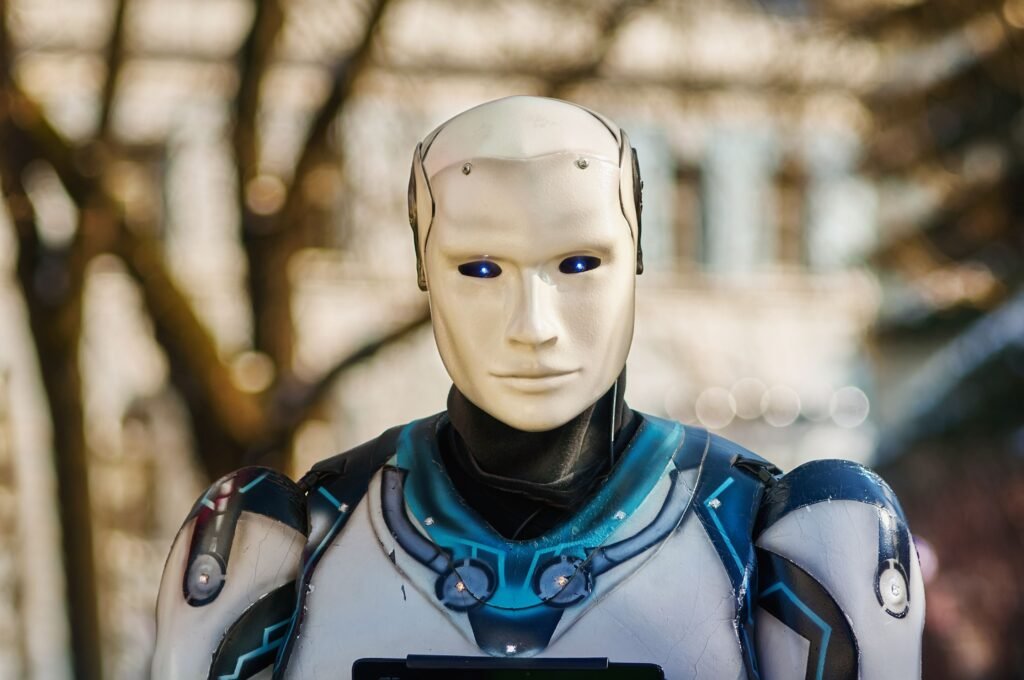
Artificial intelligence
Artificial intelligence is no longer a technology reserved for large technology companies or research laboratories. In 2026, AI has become part of everyday work across many industries, changing how people communicate, analyze information, create content, solve problems, and manage businesses.
For workers and business owners, the important question is no longer whether AI will affect the workplace. It already is. The bigger question is how people can adapt and take advantage of these changes without being left behind.
This article explores how artificial intelligence is changing jobs in 2026, which types of work are being affected, what skills are becoming more valuable, and how individuals can prepare for the future.
The Growing Role of AI in the Workplace
AI tools can now perform many tasks that previously required significant amounts of human time. These include writing and editing documents, summarizing information, analyzing large amounts of data, creating images, assisting with customer service, translating languages, generating software code, and automating repetitive administrative tasks.
This does not necessarily mean that AI is simply replacing every human worker. In many cases, AI is changing how a job is performed rather than eliminating the entire job.
For example, a marketing professional can use AI to generate initial content ideas, analyze customer trends, or create drafts. The professional still needs to understand the audience, evaluate the quality of the output, develop strategy, and make final decisions.
The same pattern can be seen in many other professions: AI handles certain tasks while humans provide judgment, creativity, communication, responsibility, and expertise.
Which Jobs Are Most Affected by AI?
Jobs that involve repetitive, predictable, or highly structured tasks are generally more exposed to automation.
Some examples include:
- Data entry
- Basic administrative work
- Routine customer support
- Simple content production
- Basic translation
- Repetitive financial tasks
- Document processing
- Some forms of software development
- Routine research and information gathering
However, being “affected” does not automatically mean a job will disappear.
In many situations, employees who learn to use AI effectively may become more productive and valuable. A worker who can complete a task in one hour with the help of AI may be able to accomplish what previously required several hours.
This creates an important shift: AI skills can become productivity skills.
AI Is Creating New Opportunities Too
While AI can automate certain tasks, it is also creating new roles and opportunities.
Businesses need people who can implement AI systems, manage AI-powered workflows, evaluate AI-generated information, protect data, and develop strategies around new technology.
Some emerging areas include:
- AI implementation
- AI product development
- Automation management
- AI-assisted content creation
- Data analysis
- AI security and governance
- Machine learning
- AI consulting
- Digital marketing using AI
- AI training and education
There are also opportunities for freelancers and small businesses.
A person does not necessarily need to become an AI engineer to benefit from the technology. Someone with skills in writing, graphic design, marketing, programming, research, or customer service can combine those skills with AI tools to offer services more efficiently.
The Most Important Skills in the AI Era
As AI becomes more capable, workers need to think beyond traditional technical skills.
1. AI Literacy
Understanding how AI works at a practical level is becoming increasingly useful.
You do not need to understand every mathematical detail behind a large language model. However, you should know what AI can do, where it performs well, where it can fail, and how to use it responsibly.
Basic AI literacy can help workers choose the right tools and avoid unrealistic expectations.
2. Critical Thinking
AI can produce convincing answers that are incomplete, inaccurate, or misleading.
That makes critical thinking extremely important.
Workers need to ask:
- Is this information accurate?
- Does the source appear reliable?
- What information is missing?
- Does the answer actually solve the problem?
- Should this decision be made by a human?
The ability to evaluate AI output may become just as important as the ability to generate it.
3. Communication
Good communication remains a highly valuable human skill.
AI can help write emails, reports, advertisements, and other documents, but humans still need to understand audiences and communicate ideas effectively.
People who can explain complicated ideas clearly, negotiate, collaborate, and build relationships will continue to have an important advantage.
4. Creativity
AI can generate ideas quickly, but human creativity remains important for deciding which ideas are meaningful and appropriate.
Creative professionals can use AI as a brainstorming partner rather than treating it as a complete replacement for their own thinking.
5. Adaptability
Technology changes quickly.
A skill that is valuable today may become easier to automate tomorrow. As a result, workers should develop a habit of continuous learning.
Instead of asking, “What single skill should I learn for the rest of my career?” it may be better to ask, “How can I continue learning as technology changes?”
The Rise of Human-AI Collaboration
One of the most important workplace trends is the combination of human expertise and artificial intelligence.
Think of AI as a powerful assistant rather than an independent employee.
For example, a journalist might use AI to organize research while personally conducting interviews and verifying facts. A programmer might use AI to generate code while reviewing, testing, and improving it. A business owner might use AI to analyze customer feedback while making the final business decisions themselves.
This model can make people significantly more productive.
The most successful workers may therefore not be those who compete against AI, but those who learn how to work effectively with AI.
What Businesses Should Do
Businesses also need to adapt.
Companies that introduce AI without a clear strategy may create new problems, including inaccurate information, security risks, privacy concerns, and poor-quality automated communication.
Businesses should consider several priorities.
Train Employees
Employees need practical training on how to use AI tools safely and effectively.
Training should cover both productivity and responsible use.
Protect Sensitive Information
Employees should understand what information can and cannot be entered into AI systems.
Confidential business information, customer data, passwords, and other sensitive material require appropriate protection.
Keep Humans in the Loop
Important decisions should not always be delegated entirely to automated systems.
Human review remains important when decisions involve customers, finances, employment, security, legal issues, or other high-impact areas.
Measure Results
Companies should evaluate whether AI is actually improving productivity, quality, customer experience, or profitability.
Simply using AI does not guarantee better results.
How Workers Can Prepare for the Future
If you are concerned about AI changing your career, the best response is usually not to ignore the technology.
Instead, start experimenting with it.
Choose AI tools that are relevant to your profession and learn how they can improve your daily work. Identify repetitive tasks that can be automated and focus more of your time on activities requiring judgment, creativity, relationships, and specialized knowledge.
You can also build a small portfolio demonstrating how you use AI to solve real problems.
For example, a marketer could create an AI-assisted marketing campaign. A designer could demonstrate an AI-supported creative workflow. A developer could build an application using AI-assisted programming tools.
The goal is not simply to say, “I know how to use AI.”
The goal is to demonstrate: “I know how to use AI to produce valuable results.”
Will AI Replace Human Workers?
This is one of the biggest questions surrounding the future of work.
The answer is more complicated than a simple yes or no.
Some tasks will likely become automated. Some jobs may shrink. New jobs will emerge. Many existing jobs will change significantly.
History shows that technological change often transforms the labor market rather than simply eliminating all human work.
The personal computer changed office work. The internet changed communication and commerce. Smartphones changed how businesses interact with customers.
AI is another major technological shift.
The people who adapt may have opportunities to become more productive, while organizations that fail to adapt may struggle to remain competitive.
The Future Belongs to Adaptable Workers
AI is changing the workplace, but the future of work is not determined by technology alone.
Human skills such as judgment, empathy, leadership, creativity, communication, responsibility, and problem-solving remain extremely valuable.
The most important advantage may be the ability to combine those human qualities with modern AI tools.
Workers who continue learning, experiment with new technology, and understand how to apply AI to real-world problems will be better positioned for the changing economy.
Final Thoughts
Artificial intelligence is transforming the workplace in 2026, but the story is not simply about machines replacing people.
It is about tasks changing, jobs evolving, and new opportunities emerging.
For workers, the smartest approach is to learn how AI can complement their existing skills. For businesses, the priority should be responsible implementation, employee training, data protection, and measurable results.
AI is likely to continue developing rapidly. Nobody can predict every change that will happen over the next decade, but one thing is increasingly clear: the ability to adapt and learn will be one of the most valuable career skills of the AI era.
Rather than asking whether AI will change your job, a better question may be:
How can you use AI to become better at your job?