


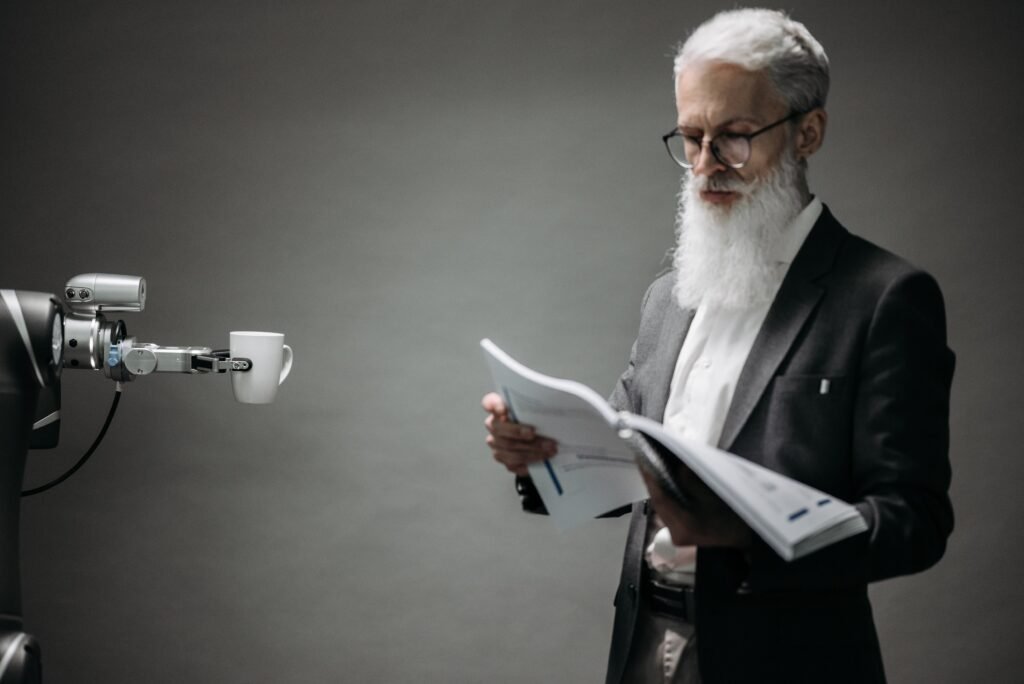
Artificial intelligence (AI) is no longer a technology limited to research laboratories or large technology companies. In 2026, AI has become an important part of everyday work for millions of people around the world. From writing emails and analyzing data to creating content, assisting customers, and automating repetitive tasks, AI is changing how businesses operate and how employees approach their jobs.
The rise of AI is creating new opportunities, but it is also raising important questions about skills, employment, productivity, and the future of work. Understanding these changes can help employees, entrepreneurs, and businesses prepare for a workplace that is becoming increasingly digital and AI-powered.
AI Is Making Everyday Tasks Faster
One of the biggest effects of AI in the workplace is automation. Many jobs involve repetitive activities that consume time but do not necessarily require complex decision-making.
For example, employees may spend hours organizing information, writing routine emails, preparing reports, summarizing documents, or entering data. AI-powered tools can now assist with many of these activities, allowing workers to spend more time on tasks that require creativity, communication, and human judgment.
Instead of replacing every part of a job, AI is often becoming an assistant that helps people complete their work more efficiently.
A marketing professional, for example, can use AI to generate initial content ideas, analyze customer trends, or create a draft campaign. The professional can then review, improve, and personalize the material before publishing it.
This combination of human expertise and AI assistance can significantly reduce the amount of time required to complete certain tasks.
AI Is Changing the Skills Employers Need
As technology changes the workplace, the skills that employers value are changing as well.
Technical knowledge remains important, but employees increasingly need to understand how to work effectively with AI tools. Knowing how to ask AI systems clear questions, evaluate their answers, identify mistakes, and use AI responsibly is becoming an important workplace skill.
At the same time, human skills are becoming even more valuable.
Creativity, critical thinking, leadership, emotional intelligence, communication, problem-solving, and decision-making are difficult to automate completely. These skills allow people to understand complex situations and make decisions that require context and judgment.
This means that the future workplace is unlikely to be simply about humans versus machines. Instead, successful workers may be those who know how to combine human strengths with AI capabilities.
AI Is Creating New Career Opportunities
Although concerns about job displacement are widespread, AI is also creating new types of work.
Businesses need people who can develop, manage, monitor, and improve AI systems. New opportunities are emerging in areas such as AI engineering, data analysis, AI consulting, automation, cybersecurity, AI product development, and AI governance.
Even traditional professions are developing new AI-related roles.
For example, marketing specialists may become responsible for managing AI-assisted campaigns. Customer service teams may work alongside AI assistants. Teachers may use AI tools to create educational materials and personalize learning experiences. Financial professionals may use AI to analyze large amounts of information more quickly.
The important point is that many future jobs may not have exactly the same responsibilities as today’s jobs.
Small Businesses Are Benefiting From AI
AI is not only useful for large corporations. Small businesses and independent professionals can also use AI to compete more effectively.
A small business owner can use AI to help create marketing materials, answer common customer questions, analyze sales information, organize business documents, or develop ideas for social media content.
For freelancers and entrepreneurs, AI can reduce the time required for administrative work. This can allow a small team or even a single person to perform tasks that previously required several employees or expensive services.
However, businesses should not depend on AI without human supervision. AI-generated information can sometimes be inaccurate, outdated, or inappropriate. Human review remains essential, especially when decisions involve customers, finances, legal matters, or sensitive information.
Remote Work and AI Are Becoming More Connected
The growth of remote and hybrid work has also increased the importance of AI.
Teams working from different locations need effective ways to communicate, organize information, manage projects, and collaborate. AI can assist by summarizing meetings, organizing tasks, searching through documents, and helping employees find information quickly.
For distributed teams, these capabilities can reduce the amount of time employees spend on administrative activities.
AI may also help organizations support employees across different time zones and languages. Translation and communication tools can make international collaboration easier, allowing companies to work with people from a wider range of locations.
AI Is Changing Customer Service
Customer service is another area experiencing major changes.
Many businesses now use AI-powered assistants to respond to frequently asked questions, provide basic information, and help customers navigate services. These systems can operate around the clock, which can be particularly useful for companies serving customers in different time zones.
However, AI cannot always understand complicated or emotional situations as well as a human representative.
For this reason, many businesses are adopting a hybrid approach. AI handles simple and repetitive requests, while human employees deal with more complex problems.
This approach can improve efficiency without removing the human element from customer service.
The Importance of Human Oversight
One of the biggest lessons of the AI era is that automation does not eliminate responsibility.
AI systems can produce convincing answers that are nevertheless incorrect. They may misunderstand a question, use unreliable information, or generate content that requires additional verification.
Employees therefore need to treat AI as a powerful tool rather than an unquestionable authority.
Human oversight is particularly important in areas such as healthcare, finance, law, education, cybersecurity, and government services. In these fields, mistakes can have serious consequences.
Organizations should establish clear rules for when AI can be used, how its output should be reviewed, and which decisions must remain under human control.
AI and Workplace Productivity
One of the strongest arguments for workplace AI is increased productivity.
If employees can complete routine tasks faster, they may have more time for activities that directly contribute to business growth. For example, instead of spending most of the day preparing a report, an employee could use AI to organize the initial information and then spend more time analyzing the results and making strategic recommendations.
However, productivity should not simply mean asking employees to do more work in less time.
Organizations should also consider whether AI can help reduce unnecessary workloads, improve work-life balance, and allow employees to focus on meaningful tasks.
Used responsibly, AI has the potential to improve both productivity and the quality of work.
The Risk of Job Displacement
Despite its benefits, AI also creates legitimate concerns about employment.
Some tasks that currently require human workers may become automated. Jobs that involve highly repetitive and predictable activities may be particularly affected.
However, the impact will likely vary significantly between industries and occupations. In many cases, AI may change the responsibilities within a job rather than completely eliminate the job itself.
This makes reskilling and continuous learning increasingly important.
Workers who regularly update their knowledge and learn how to use new technologies may be better prepared for changes in the labor market.
Why Continuous Learning Matters
The traditional idea of learning a skill once and using it throughout an entire career is becoming less realistic.
Technology is developing quickly, which means workers may need to learn new tools and methods throughout their professional lives.
Fortunately, learning about AI does not necessarily require becoming a computer programmer.
A writer can learn how to use AI for research and editing. A business owner can learn how to automate administrative tasks. A teacher can learn how AI can support lesson planning. A salesperson can learn how AI can assist with customer research and communication.
The goal is not for every worker to become an AI expert. The goal is to understand how AI can be used effectively within a particular profession.
AI Will Not Remove the Need for Human Creativity
One common misconception is that AI will make human creativity unnecessary.
In reality, creativity remains one of the most important human abilities.
AI can generate ideas, text, images, and other forms of content, but humans still need to decide what is meaningful, useful, appropriate, and original. A successful business campaign, for example, requires an understanding of people, culture, emotions, and context.
AI can support the creative process, but human direction remains extremely important.
The strongest results often come from collaboration between people and technology rather than from relying entirely on either one.
How Businesses Can Prepare for the AI Workplace
Companies that want to benefit from AI should approach adoption strategically.
First, businesses should identify repetitive tasks where AI can provide genuine value. They should then test appropriate tools and measure whether those tools actually improve productivity or reduce costs.
Employees should also receive training. Introducing AI without explaining how employees should use it can create confusion and increase the risk of mistakes.
Companies should establish policies covering data privacy, security, accuracy, intellectual property, and human oversight.
Most importantly, businesses should remember that technology is a means to an end. AI should be introduced to solve real problems rather than simply because it is popular.
The Future of Work Will Be Human and AI-Powered
The workplace of the future is unlikely to be completely controlled by artificial intelligence. Instead, it is likely to be a combination of human expertise and increasingly capable digital tools.
AI can process information quickly, automate repetitive activities, assist with research, and support decision-making. Humans bring creativity, empathy, judgment, leadership, and the ability to understand complex social situations.
The organizations and workers that learn to combine these strengths may have a significant advantage.
For employees, the most important step is to remain curious and adaptable. Learning how AI works, experimenting with useful tools, and developing strong human skills can help workers remain competitive as technology evolves.
For businesses, the challenge is to adopt AI responsibly while protecting employees, customers, and sensitive information.
Conclusion
Artificial intelligence is changing the workplace in ways that will continue to develop throughout 2026 and beyond. It is making many tasks faster, creating new career opportunities, changing the skills employers need, and helping businesses of all sizes operate more efficiently.
At the same time, AI brings challenges involving job displacement, privacy, accuracy, security, and responsible decision-making.
The future of work should therefore not be viewed simply as a competition between humans and machines. The bigger opportunity is learning how humans and AI can work together.
Workers who embrace continuous learning and businesses that adopt AI thoughtfully will be better positioned to navigate the changing world of work. AI is not simply changing the tools people use—it is changing how work itself is organized, performed, and understood.